
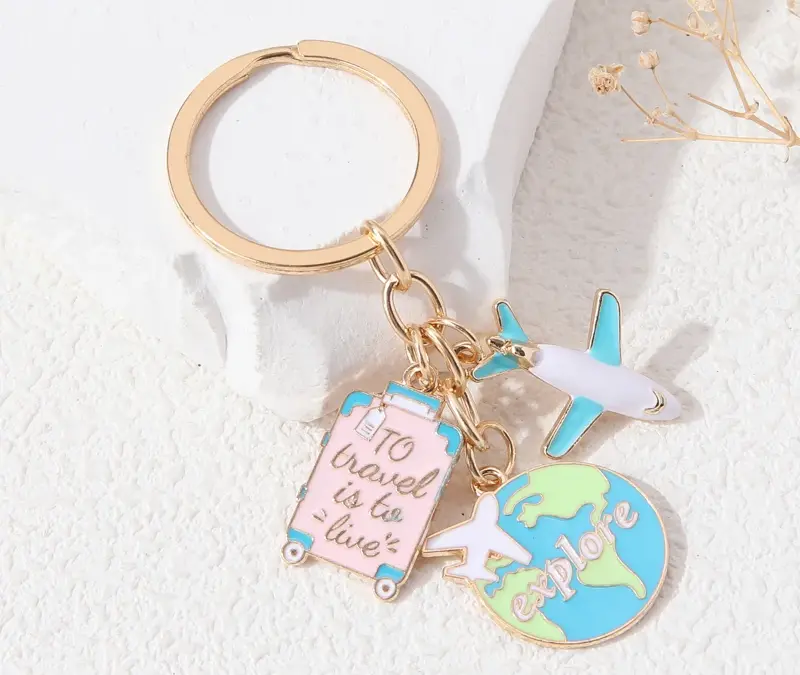
To display keychains, choose a tray, tabletop stand or properly installed hanging display that lets you see each design. Start with a small group, leave room between pieces and keep the ones you use every day easy to reach.
You do not need to turn your whole room into a souvenir shop. A few favourites, arranged with a little space around them, can tell a story without taking over the shelf.
Which keychains do you want to see every day?
Empty the collection onto a clear surface before choosing a display. Separate everyday keys from decorative pieces, gifts and souvenirs. Then pick a handful you would actually enjoy looking at, rather than trying to show everything at once.
Give each piece a reason to be there: a trip, a favourite hobby, a colour you love. Keep the rest together so you can change the selection later. Rotation is a styling choice, not a rule. If the whole collection makes you smile, leave room for a larger arrangement.
Which display suits your space?
Think about where the collection will live and how often you will take pieces down. A display beside your door has a different job from one on a bedroom shelf.
| Display idea | Consider it when | Check before choosing |
|---|---|---|
| A shallow tray | You want a small, easy-to-rearrange group | Whether the pieces sit separately rather than in a pile |
| A tabletop stand | You prefer a hanging arrangement without fixing it to a wall | Stability, spacing and the maker’s stated limits |
| A display board | You want to group pieces with cards or photos | Suitable fixings and how the board itself is supported |
| An installed rail or rack | You want a fixed place for the collection | The surface, installation instructions and permitted load |
These are arrangement ideas, not promises that a particular hook, stand or adhesive will hold your collection. Follow the display maker’s instructions. If you cannot drill or fix anything to a surface, choose a suitable freestanding option instead of improvising a wall attachment.
How can you arrange different shapes together?
Try one organising idea first: colour, theme or memory. Mixing all three at once can make it harder to decide what belongs where.
A travel-themed group could start with the airplane travel keychain. A desk arrangement might put a coffee cup keychain beside other everyday-interest motifs. For a music corner, the treble clef keychain offers a different shape to build the arrangement around.
Tu Dije is an academic demo. These are imported design examples, not products available to order or pay for; delivered contents, options and quality remain unverified.
Treat the motifs as visual starting points, not a set you have to copy. Browse the Charms collection for other design ideas, then choose the pieces that make sense together to you.
How much space should you leave between pieces?
Enough to see the shapes without having to untangle them. There is no useful universal measurement here: your display, collection and available space decide it.
Place the pieces before adding extra decoration. Step back and ask whether you can still recognise each motif. If not, remove something or spread the group out. A postcard or small note can add context, but it does not need to compete with every keychain.
For pieces you use, check that you can remove one without disturbing the whole arrangement. A display that looks lovely but makes leaving the house annoying is doing the wrong job.
What should you check before adding a new piece?
Look at the actual listing, the selected option and any warnings, not just the first photo. Check dimensions, attachment details and materials where the seller provides them. If those details are missing, ask rather than guessing from an image.
If the piece is a gift, check packaging and delivery information separately. A photographed gift box does not by itself establish what will arrive. For Tu Dije’s demo listings, these details are not confirmed and no orders are accepted.
FAQs
Is a keychain a thoughtful gift for someone who collects them?
It can be a personal choice when the motif connects with their interests. Ask whether they prefer a keepsake to display or an item for daily use, and check the actual product details before buying elsewhere. Tu Dije currently accepts no orders.
Can I judge the finish and contents from the listing photo?
Use the photo as one source, not a guarantee. Check the selected variant, written description and seller’s answers. Tu Dije’s imported images do not certify delivered quality, materials or contents.
Will a keychain arrive in time to give as a present?
Confirm the seller’s current delivery information for your destination and allow for uncertainty. Do not turn an estimate into a guaranteed date. Tu Dije has no confirmed delivery offer because it is a course demo with orders and payments disabled.